

Tool Selection and Argument Validation
An agent chooses tools from the operations made available to it. Clear instructions and valid parameter schemas help it select the right operation and supply usable arguments.
Before you begin
A tool-enabled model, selected tools, and permission to use their connections.
Key concepts
Tool
An operation that an agent or workflow can call. Its input schema and permissions determine what the caller can supply and do.
Tool argument
A value supplied when calling a tool. It must match that tool’s exposed input schema and refer to accessible resources.
Schema
A definition of fields, types, required values, and supported constraints. Use it to validate the shape of data; it does not establish factual correctness.
Connection
A saved authorization to a particular provider account. An action uses the selected account’s access, subject to StackAI sharing controls.
Instructions
Directions that define the task, constraints, and expected response. Keep them distinct from source text or tool results used as evidence.
Configure tool inputs
Add the required tools and review each tool’s description and schema.
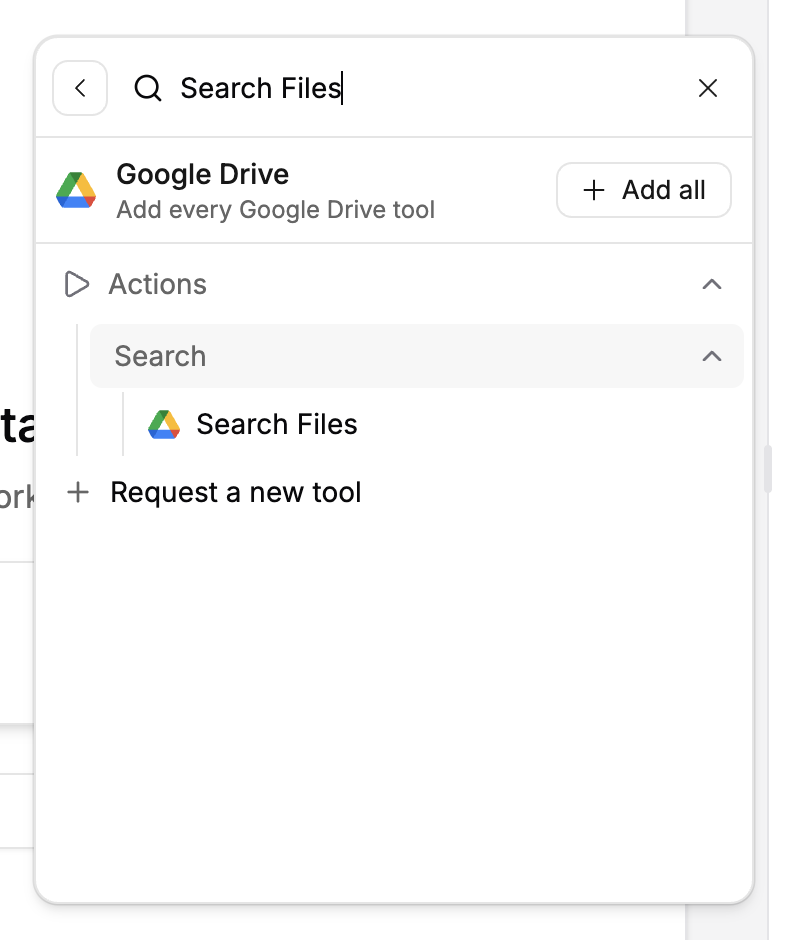
Use Add Tools to choose the required provider action.
Explain when the agent should call each tool and what evidence it must return.
Inspect a run’s tool calls, arguments, and results before changing the instructions.
The agent calls the intended operation with values that match its schema.
Behavior and limitations
Making a tool available does not guarantee a call. Required configuration can be separate from model-supplied arguments. A tool-selection problem differs from a permission failure or an invalid argument. Correct the failing layer rather than repeatedly rewriting the prompt.
Related resources
Was this helpful?